
Tips for Hiking in South Korea in 2026: Best Seasons, Trails & Safety Tips

South Korea is a top hiking destination in 2026. You’ll find diverse trails, scenic mountains, and modern safety systems. Choosing the right season and trail ensures a fun and safe adventure. This guide helps you pick trails, prepare for weather, and stay safe. Whether it’s your first hike or a repeat trip, you’ll get expert tips for the best experience.
Best Seasons for Hiking in South Korea
Hiking in Korea is fun all year, but conditions vary. Spring brings mild weather, blooming flowers, and clear skies. Trails like Bukhansan and Namsan are lively but manageable. Summer is hot and humid. Heavy rain and crowded trails make it less ideal. Still, coastal hikes are beautiful if you plan early mornings.
Autumn is the most popular time. Leaves turn fiery red and orange. Trails are dry, and the air is crisp. Winter is cold, especially in alpine regions like Hallasan. Snow adds beauty but increases risk. For the best hiking in South Korea, aim for spring or autumn. You’ll enjoy good weather, manageable crowds, and scenic views.
Best Hiking Trails in South Korea for 2026
South Korea’s hiking destinations are diverse. You can explore urban mountains, coastal paths, and alpine peaks. There’s a trail for every level of hiker.
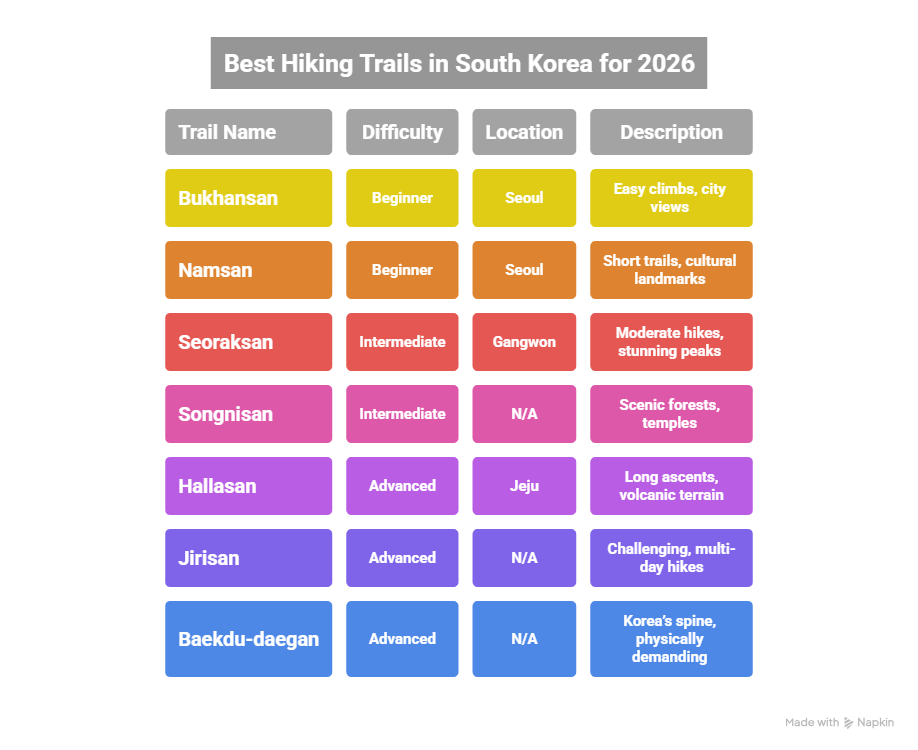
- Beginner-Friendly Trails
- Bukhansan (Seoul) – Easy climbs, city views
- Namsan (Seoul) – Short trails, cultural landmarks
- Intermediate Trails
- Seoraksan (Gangwon) – Moderate hikes, stunning peaks
- Songnisan – Scenic forests, temples
- Advanced Trails
- Hallasan (Jeju) – Long ascents, volcanic terrain
- Jirisan – Challenging, multi-day hikes
- Baekdu-daegan – Korea’s spine, physically demanding.
Pick trails based on your fitness and schedule. Beginners can enjoy short city hikes. Experienced hikers can explore multi-day alpine adventures. If you want a guided experience, you can explore our Seoul tours page to combine hiking with city sightseeing.
Safety Tips for Hiking in South Korea
South Korea hiking tips include paying attention to trail markings and difficulty levels. Rangers are present in most national parks. The weather can change quickly, so stay alert. Always carry water, proper clothing, and a fully charged phone.
Safety Aspect | What to Know | Pro Tip |
Trail Markings | Colored markers show trail direction | Follow markers, avoid shortcuts |
Weather | Can change fast, especially in mountains | Check forecasts, carry light rain gear |
Wildlife & Insects | Generally safe, minor insects present | Use repellent, keep food sealed |
Emergency Numbers | 119 for urgent help | Save local ranger contacts |
Hiking Difficulty | Easy, Intermediate, Advanced | Match trail to fitness, start early |
Hiking in South Korea is safe with preparation. Know the trails, pack essentials, and respect warnings. Staying alert ensures a smooth, enjoyable hike. You can also check our Hiking Services page for expert support and guided hiking options.
What to Pack for Hiking in South Korea
Proper gear matters. Packing right keeps you safe and comfortable, no matter the season.
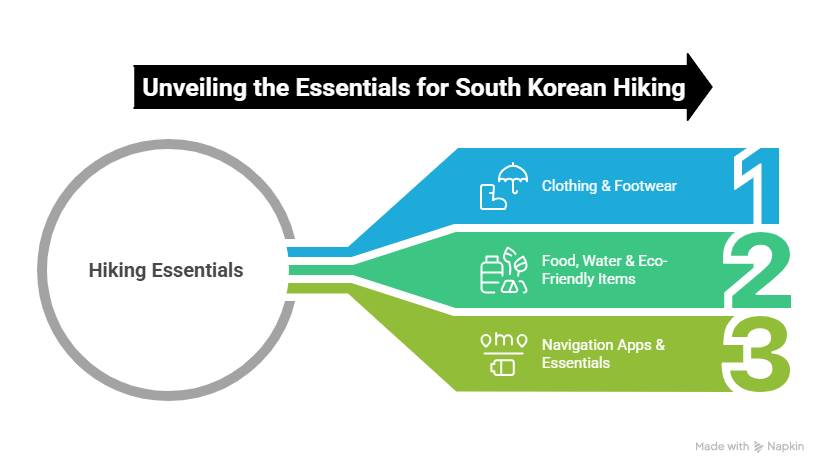
- Clothing & Footwear – Layered clothes, sturdy shoes, rain gear
- Food, Water & Eco-Friendly Items – Hydration packs, energy snacks, reusable containers
- Navigation Apps & Essentials – Maps, GPS apps, power banks, first aid kits
Packing smart helps you focus on the views, not discomfort. Always adjust your kit based on weather, trail difficulty, and hike duration. For multi-day trips, explore our Hotel Booking page to find nearby accommodations for rest and recovery.
Cultural Etiquette & Hiking Rules in Korea
Respect local customs while hiking. Follow trail manners and keep quiet in temple areas. Avoid loud music or littering. South Korea hiking destinations value cultural respect and nature preservation.
Leave-no-trace principles are important. Pack out everything you bring. Do not pick plants or disturb wildlife. Respecting nature ensures trails stay beautiful for future hikers. For expert tips on group adventures, check our M.I.C.E & Group Travel page.
Frequently Asked Questions About Hiking in South Korea
Do I need a permit to hike in South Korea?
Most hiking trails in South Korea don’t require permits. Only certain advanced or protected areas may need special permission. Check before your hike to avoid surprises and ensure smooth access.
Is hiking in South Korea safe for tourists?
Yes, hiking in South Korea is generally very safe for tourists. Trails are well-marked, rangers are available, and locals respect safety rules. Preparation and awareness make your experience worry-free.
What is the best month to hike in Korea?
Spring (April–May) and autumn (September–October) are the best months for hiking. The weather is mild, the scenery is beautiful, and the trails are less crowded compared to summer or winter.
Can beginners hike Korean national parks?
Absolutely. Many national parks offer beginner-friendly trails. Start with short, easy routes in Seoul or nearby mountains. Gradually increase difficulty as you gain confidence and fitness level.
Are guided hiking tours worth it in Korea?
Yes. Guided hiking tours offer local expertise, safety support, and cultural insights. You’ll learn about landmarks, trails, and hidden spots. They save time and ensure a stress-free adventure. You can find more details on our Tours page.
Plan Your Hiking Trip in South Korea with GoKoreaGo
Choosing a Seoul-based travel agency like GoKoreaGo makes hiking stress-free. You get expert planning, guided hikes, and customized itineraries. Our team in Gangnam-gu offers English support for international travelers.
Whether you want a one-day urban hike in Seoul or a multi-day alpine adventure, we handle the details. Contact us via our Contact Us page to plan your South Korea hiking adventure and explore the best trails safely and comfortably.